
Browse Guides
5 guides
3 guides
2 guides
13 guides
1 guide
9 guides
12 guides
2 guides
18 guides
1 guide
1 guide
1 guide
2 guides
1 guide
1 guide
1 guide
1 guide
1 guide
1 guide
1 guide
2 guides
2 guides
1 guide
AI Form and Data Source Builder
Turn a rough idea into a working form or custom data source with AI-generated fields, options, validation, and calculated fields.
Use AI Form and Data Source Builder when you want to go from “I know what I need to track” to a working structure in one step.
Instead of building everything field by field, you can describe the workflow, the values people should enter, and any validation or calculations you need. AI builds the structure directly into the editor.
The same builder is used in two places:
- AI Form Builder for custom forms
- AI Data Source Builder for custom data sources
Open the builder
You can open the builder in more than one flow:
- Open a channel.
- Do one of the following:
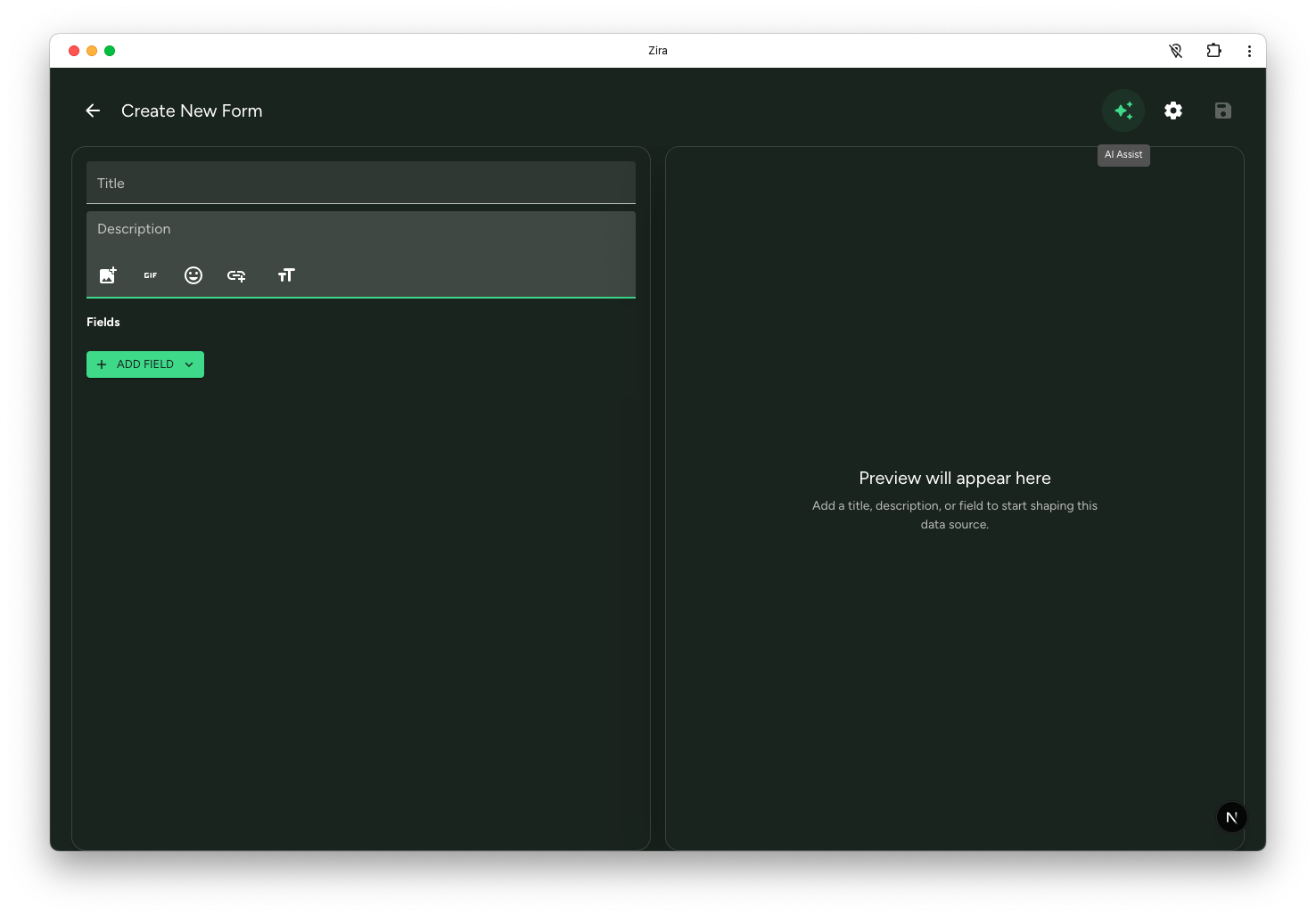
- Click the Forms tab, click +, choose Blank Form, then click AI Assist in the form editor
- Click the Data Sources tab, click Add Data Source, choose Custom, then click AI Assist
- You can also click AI Assist while editing an existing form or custom data source.
What it can build for you
The builder can create:
- a title and description
- the main field structure
- clearer labels and sections
- dropdown options
- required fields
- validation rules
- calculated fields and expressions
This works best when you describe the real workflow instead of just listing a few field names.
Ask for a form with confidence
Good requests often explain:
- what the form or data source is used for
- who will fill it out
- which values must be captured
- which values should be calculated
- what should be required or validated
For example, you can ask for:
- an inspection checklist
- a work-order intake form
- a downtime tracking form
- a quality record with pass or fail logic
- a production entry form with totals and calculated fields
Review the structure
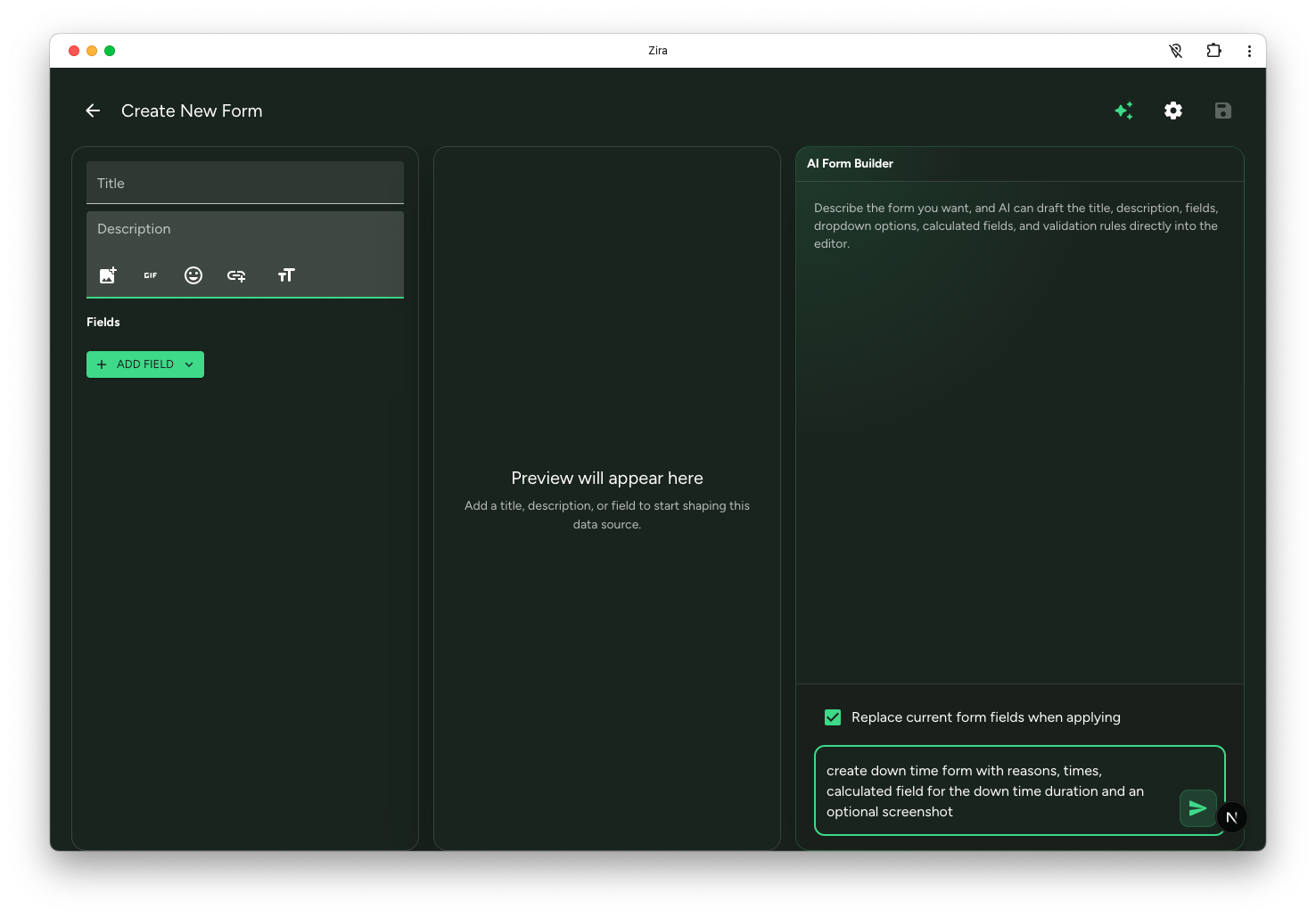
Before you apply the result, review:
- the suggested title
- the description
- each field
- metric matching
- options for list fields
- validation details
- any expression that was suggested
The preview is there to help you confirm the structure before it is added to the editor.
Understand metric matching
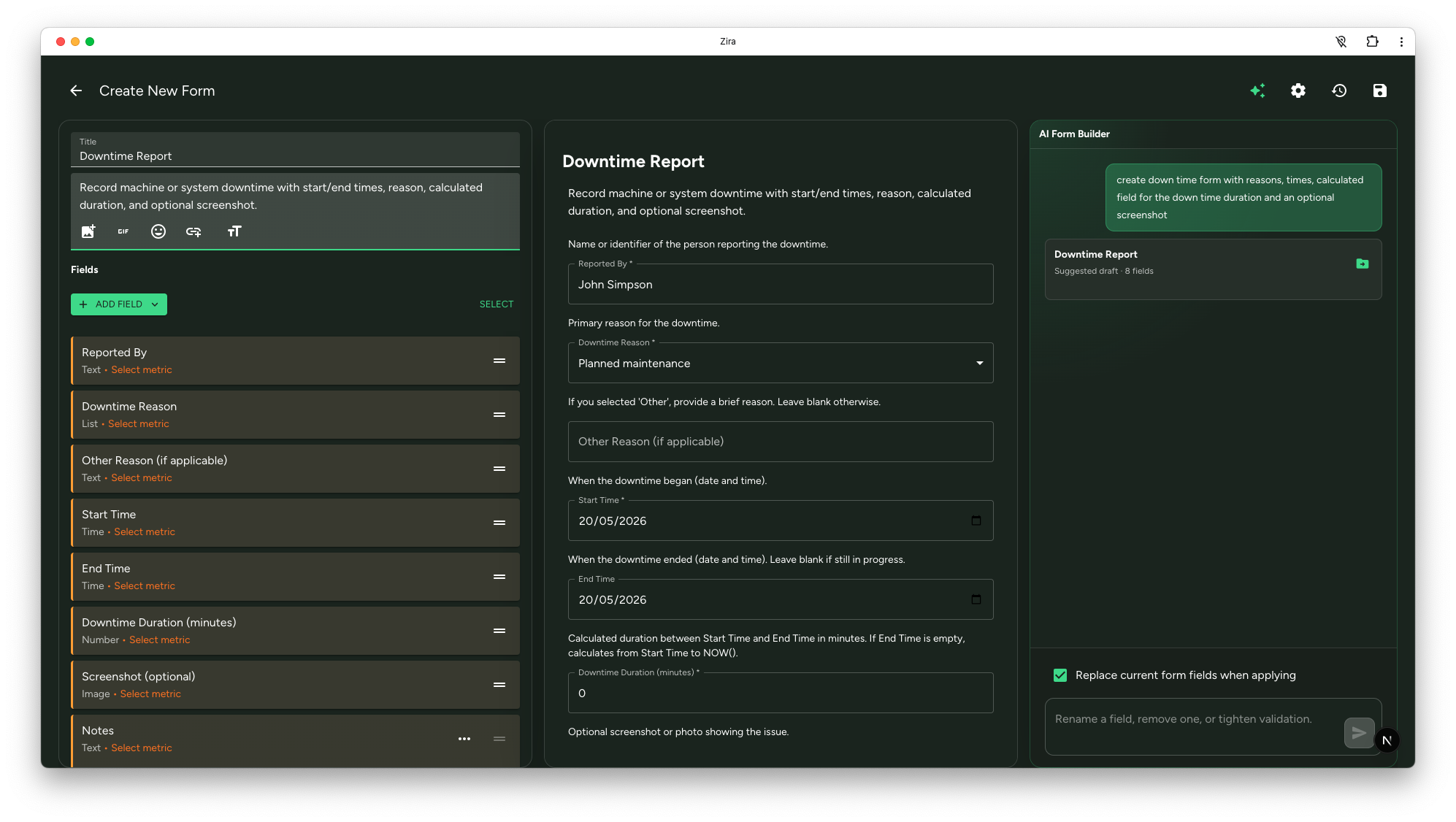
When a suggested field matches an existing metric, Zira can preselect it for you.
If the right metric does not already exist:
- the field can still be added
- the metric stays empty
- you can finish the setup manually in the editor
That makes setup much faster without forcing the wrong metric onto the form.
Apply the structure and keep improving it
Before applying, choose whether to:
- replace the current fields
- or append the new fields to what you already have
After the structure is applied:
- review the metric for each field
- refine field names and labels
- adjust any options or validation
- test calculated fields carefully before saving
You can also use the same builder again while editing, so AI can help you:
- add missing fields
- simplify the structure
- revise labels and validation
- extend an existing form instead of starting over
Read next
- AI Form Fill - Complete a form from text or an image.
- Create and Edit - Full custom data-source editor workflow.
- Expressions and Validation - Refine calculated fields after the draft is applied.